Longarm Quilting vs. Domestic Machine Quilting: What's the Difference?
If you've finished a quilt top and you're deciding how to have it quilted, you've probably run into two options: finishing it yourself on a home sewing machine, or sending it out to a longarm quilter. Both can produce a finished quilt — but the process, the equipment, and the result are different in ways that matter, especially for larger quilts or ones you want to last. Here's what actually changes between the two.
What Is Domestic Machine Quilting?
Domestic machine quilting means quilting a quilt top, batting, and backing together on a regular home sewing machine — the kind most quilters already own. It works well for smaller projects like baby quilts or table runners, where the quilt fits easily under the machine's arm. On larger quilts, though, the tight workspace makes it hard to keep the layers smooth and even, and the stitching often has to be done in smaller sections.
What Is Longarm Quilting?
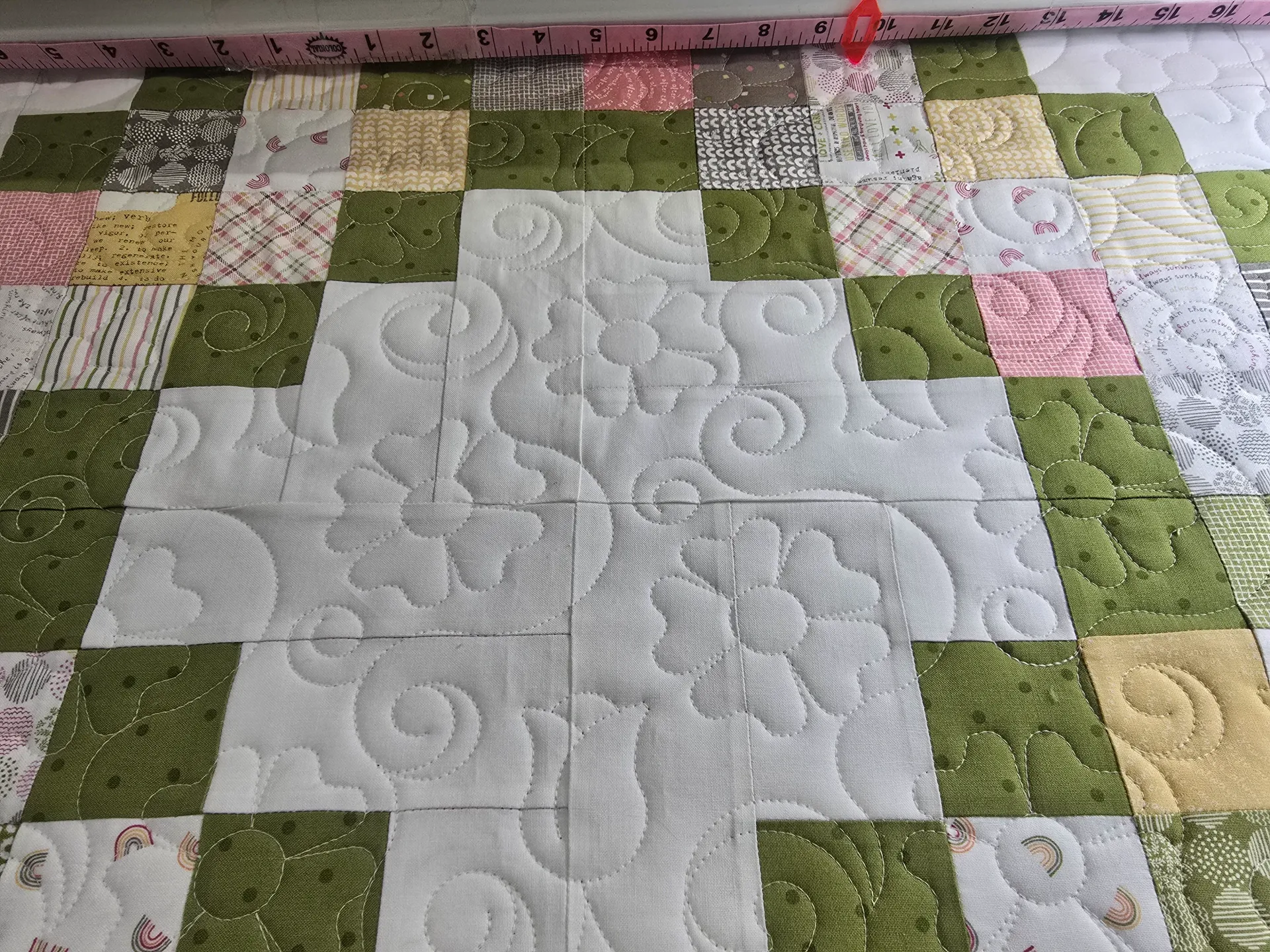
Longarm quilting uses a specialized machine — ours is a 12-foot computerized longarm — that holds the entire quilt top, batting, and backing stretched and rolled across a frame. The machine's head moves across the full width of the quilt in one pass, which keeps tension even from edge to edge, even on queen- and king-size quilts. At Brown Bear Quilting Services, that also means access to thousands of computerized quilting designs, so you're not limited to a single stitch pattern edge-to-edge.
4 Key Differences That Affect Your Finished Quilt
Stitch Tension & Consistency
Because a longarm machine keeps the whole quilt stretched evenly on a frame, the stitching tension stays consistent across the entire piece. On a domestic machine, shifting and bunching a large quilt through a small workspace makes even tension harder to maintain, especially on the last few passes.
Design Options
A computerized longarm can stitch a huge range of edge-to-edge designs precisely and repeatably. Replicating detailed, consistent patterns across a large quilt on a domestic machine takes significantly more time and hand-guiding skill.
Turnaround Time
Handling a large quilt in sections on a domestic machine takes considerably longer than a single pass on a longarm frame. Most of our longarm quilting jobs turn around in 1-2 weeks, depending on the current queue. Visit our
Pricing page for current turnaround estimates and cost details.
Sizing & Handling
Queen and king quilts are heavy and awkward to maneuver through a home machine's throat space. A longarm frame supports the full weight and size of the quilt throughout the process, which reduces the risk of puckering, shifting, or damage to the top. Not sure how to get your quilt ready to bring in? Our guide on How to Prepare Your Quilt for Longarm Quilting walks you through it.
Why Local Longarm Service Beats Mailing Your Quilt Away
Some quilters mail finished tops to an out-of-state longarm service to save money. The tradeoff: shipping costs, insurance questions, and time spent without your quilt while it travels both directions. Working with a local longarm quilter means you hand off your quilt in person, ask questions about design and batting face-to-face, and pick it up as soon as it's done — without the shipping risk to something that may be sentimental or irreplaceable. Check out the areas we serve across the Treasure Valley to see if you're in our service range.
Which Option Is Right for Your Quilt?
Small projects — table runners, baby quilts, mug rugs — are often quick and easy to finish on a domestic machine. For anything queen-size or larger, a custom design, or a quilt with sentimental value (a
memory quilt or
T-shirt quilt, for example),
professional longarm quilting services give you a more even, more durable finished result — and it's done for you.
Frequently Asked Questions
Can I quilt a large quilt on my domestic machine?
You can, but it takes longer and it's harder to keep even tension across a large piece because of the limited workspace. Many quilters use their domestic machine for piecing and smaller projects, then bring larger quilts to a longarm quilter for finishing.
Is longarm quilting more expensive than doing it myself?
Longarm quilting is priced by the square inch (currently $0.02 per square inch for edge-to-edge quilting at Brown Bear Quilting Services) plus your choice of batting and thread. See the Pricing Page for current rates — there's no cost to your own time doing it yourself, but professional finishing saves the hours of hands-on work and reduces the risk of a quilting mistake on a project you've already invested in.
How long does longarm quilting take?
Most jobs at Brown Bear Quilting Services turn around in about 1-2 weeks, depending on the current queue and the complexity of the design.
Do I need to prepare my quilt top before bringing it in?
Yes — a few simple steps (trimming loose threads, squaring the top, pressing seams) make a big difference in the finished result. See our How to Prepare Your Quilt for Longarm Quilting guide for the full checklist.
Ready to See the Difference for Yourself?
Whether you're finishing a small table topper or ready to hand off a queen-size quilt top, Brown Bear Quilting Services is here to help you get it done right. Bring in your top, batting, and backing, and let's talk design options, batting choices, and timeline.
Still have questions? Visit
our longarm quilting FAQ.